> For the complete documentation index, see [llms.txt](https://chloe-codes1.gitbook.io/til/llms.txt). Markdown versions of documentation pages are available by appending `.md` to page URLs; this page is available as [Markdown](https://chloe-codes1.gitbook.io/til/db/db-101/01_db_basics.md).
# DB Basics
## Database
> A database is a collection of data that is systematically organized, integrated, and managed for the purpose of sharing and use by multiple people.
### DBMS (Database Management System)
* RDBMS
* Database management system based on relational model
### Relational Database (RDBMS)
* Consists of a collection of tables organized as relationships with columns and rows
* Each column records a specific type of data
* Table rows are collections of values related to each object/entity
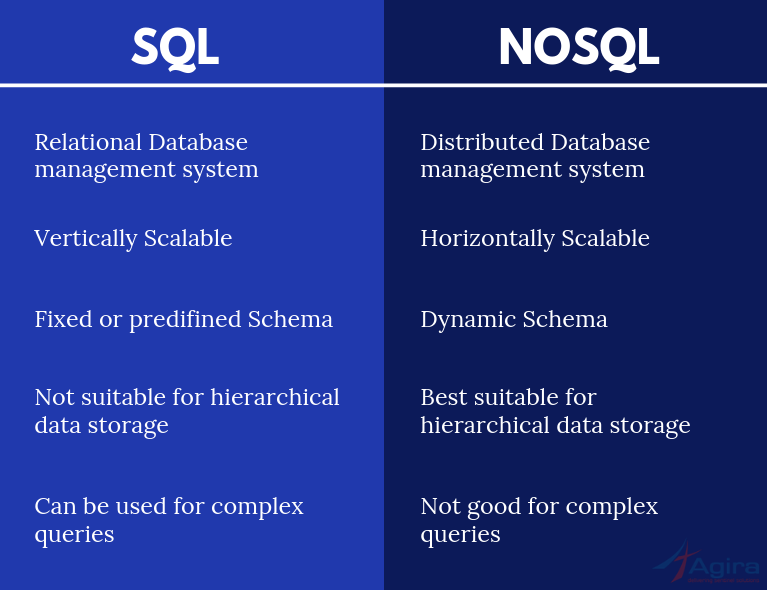
### RDBMS vs NOSQL
\
### Basic Terms
#### Schema
* An overall specification regarding the structure and constraints (structure, representation method, relationships, etc.) of data in a database
#### Table (Relation)
* A collection of data elements organized using a model of columns and rows
#### PK
* A unique value for each row that can uniquely identify stored records
\
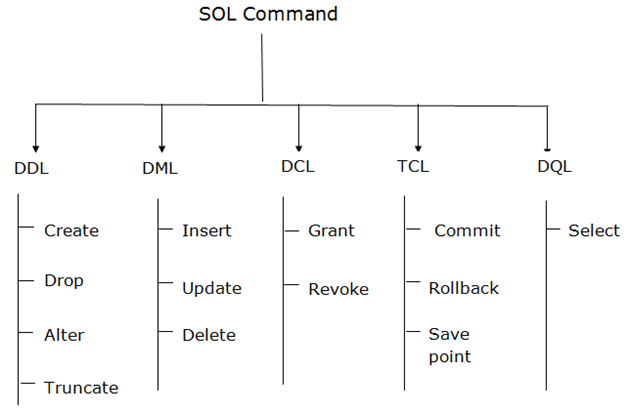
## SQL (Structured Query Language)
> A language specifically designed to manage data in RDBMS
### Creating Tables
```sql
CREATE TABLE table (
column1 datatype [constraints],
column2 datatype [constaraints],
);
```
ex)
```sqlite
CREATE TABLE contacts (
contact_id INTEGER PRIMARY KEY,
first_name TEXT NOT NULL,
last_name TEXT NOT NULL,
email TEXT NOT NULL UNIQUE,
phone TEXT NOT NULL UNIQUE
);
```
\
### Rename Table
```sqlite
ALTER TABLE table_name
RENAME TO new_table_name;
```
\
### Data Types (in `SQLite`)

\
### SELECT
* `DISTINCT`
* Retrieve without duplicates
```sqlite
sqlite> SELECT DISTINCT waypoint FROM flights;
waypoint
----------
Beijing
Moscow
Beijing
```
* `COUNT()`
* Retrieve specific count
* `LIKE`
* Wild cards
* `%` : There may or may not be a string
* `_` : There must be exactly one character
* `LIMIT ... OFFSET`
* Limit count .... up to what number
* ex)
```sql
-- Returns the first 10 rows
SELECT * FROM test LIMIT 10;
-- The above SQL and the below SQL have the same result
SELECT * FROM test LIMIT 10 OFFSET 0;
-- Returns 10 rows starting from the 11th.
SELECT * FROM test LIMIT 10 OFFSET 10;
```
```sql
.schema ____
```
\
### CREATE
```sql
sqlite> CREATE TABLE flights(
...> id INTEGER PRIMARY KEY AUTOINCREMENT,
...> flight_num TEXT NOT NULL,
...> departure TEXT NOT NULL,
...> waypoint TEXT NOT NULL,
...> arrival TEXT NOT NULL,
...> price INTEGER NOT NULL
...> );
```
#### IF NOT EXISTS
* Create only when the table does not exist
```sqlite
sqlite> CREATE TABLE IF NOT EXISTS flights(
...> id INTEGER PRIMARY KEY AUTOINCREMENT,
...> flight_num TEXT NOT NULL,
...> departure TEXT NOT NULL,
...> waypoint TEXT NOT NULL,
...> arrival TEXT NOT NULL,
...> price INTEGER NOT NULL
...> );
```
#### View Tables
```sqlite
sqlite> .tables
```
\
### INSERT
```sql
lite> INSERT INTO flights(flight_num, departure, waypoint, arrival, price) VALUES('RT9122', 'Madrid', 'Beijing', 'Incheon', 200);
id flight_num departure waypoint arrival price
---------- ---------- ---------- ---------- ---------- ----------
1 RT9122 Madrid Beijing Incheon 200
```
\
### UPDATE
```sqlite
sqlite> UPDATE flights SET waypoint = 'Tokyo' WHERE flight_num = 'SQ0972';
```
\
### DELETE
```sqlite
sqlite> DROP TABLE flights;
sqlite> .tables
sqlite> select*from flights;
Error: no such table: flights
```
\
### Select exercise
#### 1. Retrieve all data from the flights table
```sqlite
sqlite> SELECT * FROM flights;
id flight_num departure waypoint arrival price
---------- ---------- ---------- ---------- ---------- ----------
1 RT9122 Madrid Beijing Incheon 200
2 XZ0352 LA Moscow Incheon 800
3 SQ0972 London Beijing Sydney 500
```
#### 2. Retrieve all waypoints
```sqlite
sqlite> SELECT waypoint FROM flights;
waypoint
----------
Beijing
Moscow
Beijing
```
#### 3. Retrieve id and flight\_num of flights with airfare less than 600
```sqlite
sqlite> SELECT id, flight_num from flights WHERE price<600;
id flight_num
---------- ----------
1 RT9122
3 SQ0972
```
#### 4. Retrieve departure of flights with destination Incheon and price 500 or above
```sqlite
sqlite> SELECT departure FROM flights WHERE arrival = 'Incheon' AND 500 <= price;
departure
----------
LA
```
#### 5. Retrieve id and flight\_num of flights where the numeric part starts with 0 and ends with 2, and the waypoint is Beijing
> ver 1
```sqlite
sqlite> SELECT id, flight_num FROM flights where waypoint = 'Beijing' AND flight_num LIKE '__0__2';
id flight_num
---------- ----------
3 SQ0972
```
> ver 2
```sqlite
sqlite> SELECT id, flight_num FROM flights where waypoint = 'Beijing' AND flight_num LIKE '__0%2';
id flight_num
---------- ----------
3 SQ0972
```
> ver 3
```sql
sqlite> SELECT id, flight_num FROM flights where waypoint = 'Beijing' AND flight_num LIKE '%0%2';
id flight_num
---------- ----------
3 SQ0972
```
### .read
```sqlite
sqlite> .read hello_user.sql
1,"정호","유",40,"전라북도",016-7280-2855,370
2,"경희","이",36,"경상남도",011-9854-5133,5900
3,"정자","구",37,"전라남도",011-4177-8170,3100
4,"미경","장",40,"충청남도",011-9079-4419,250000
5,"영환","차",30,"충청북도",011-2921-4284,220
6,"서준","이",26,"충청북도",02-8601-7361,530
7,"주원","민",18,"경기도",011-2525-1976,390
8,"예진","김",33,"충청북도",010-5123-9107,3700
9,"서현","김",23,"제주특별자치도",016-6839-1106,43000
10,"서윤","오",22,"충청남도",011-9693-6452,49000
```
\
`+`
### Pretty Display in CLI
```sqlite
sqlite> .headers on
sqlite> .mode column
```